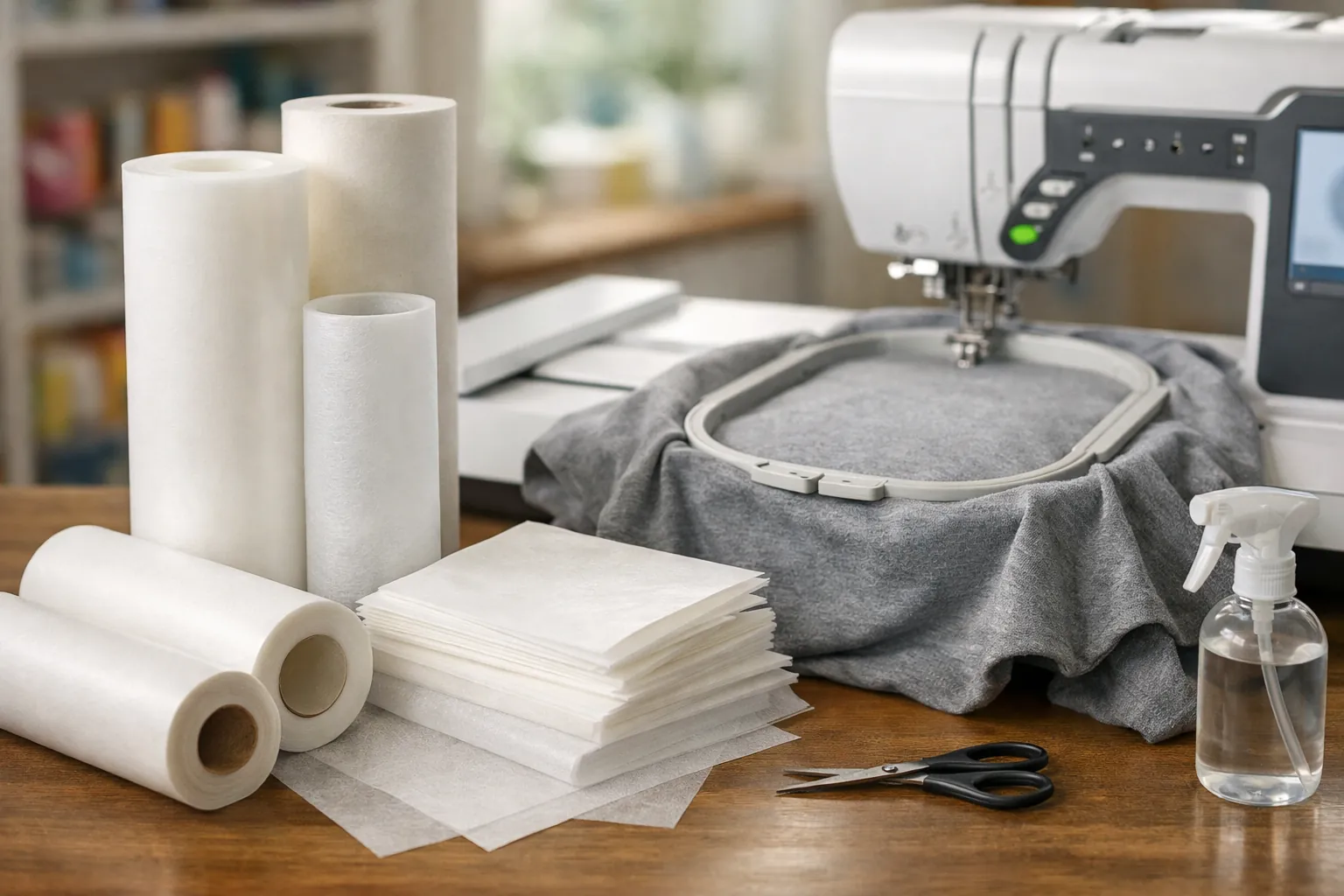
Use cut-away on anything that stretches, tear-away on stable woven fabric, and wash-away on sheer fabrics, lace and as a topping on towels. Stabilizer holds the fabric still while thousands of stitches pull on it; picking the wrong type is the most common reason designs pucker or distort.
Pick a stabilizer in two questions
The three types, explained
Tear-away
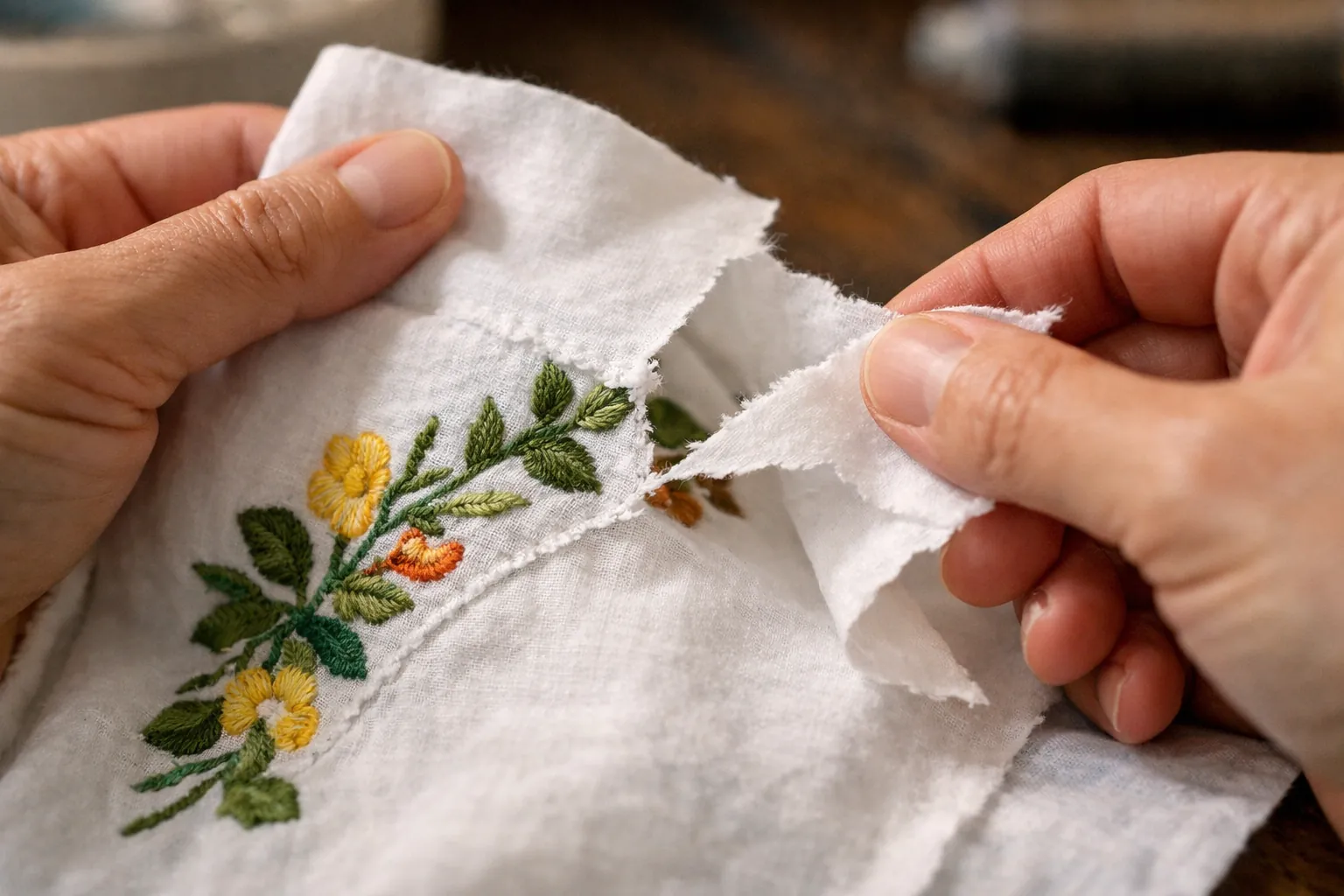
A paper-like backing that supports the fabric while stitching and is torn away afterwards. New brothread's best-selling sheets describe it as temporary support best used on firmly woven fabrics and natural fibers. Use it on quilting cotton, linen, denim, canvas, towels (with topping) and structured caps. For dense designs, use two layers or a heavier weight.
Cut-away
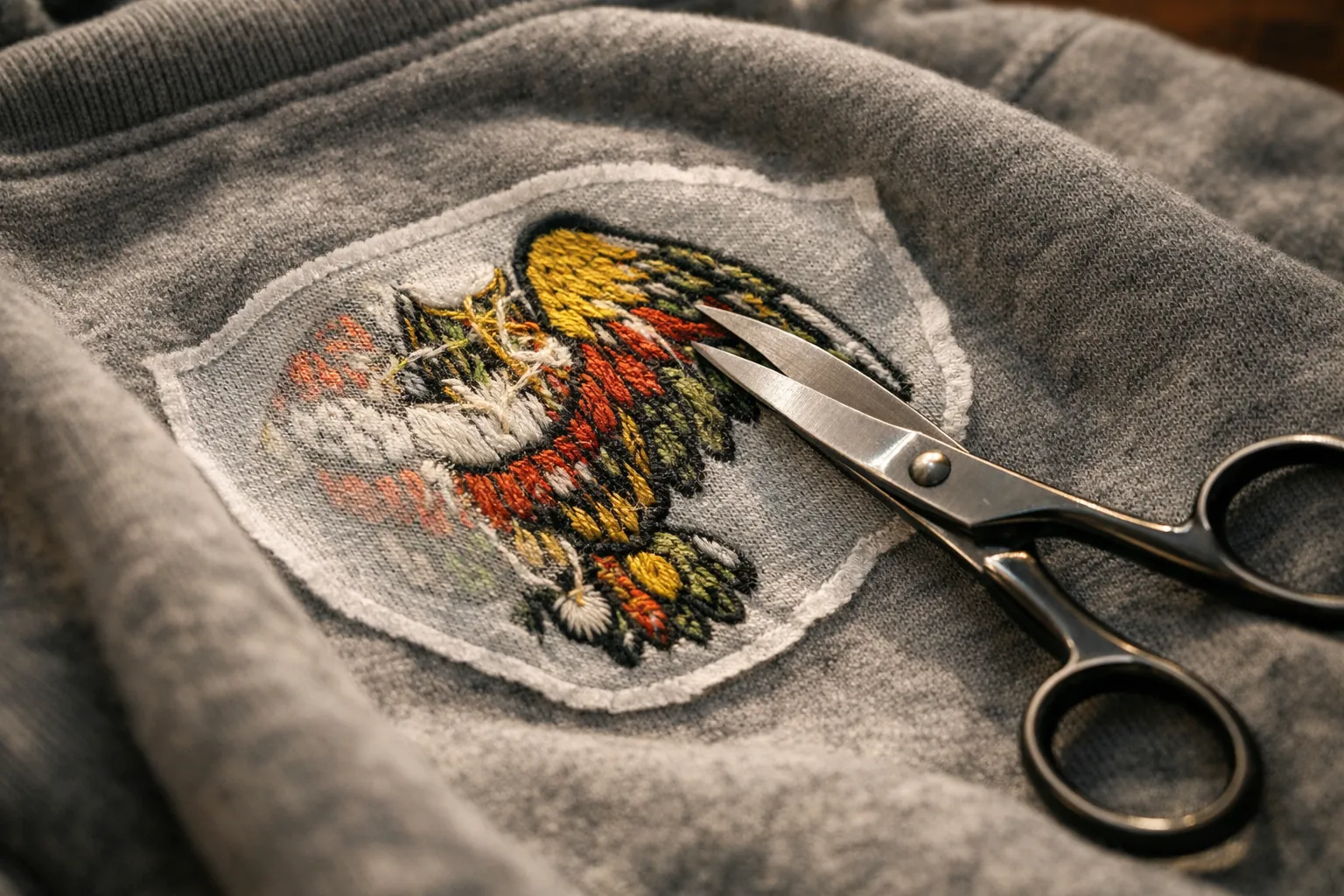
A permanent backing. After stitching you trim the excess and the rest stays behind the design, which is why it's the right choice for knits: it keeps the stitches from distorting every time the fabric stretches or is washed. Use it on T-shirts, polos, sweatshirts, fleece, and anything that moves when you tug it. No-show mesh is a soft, semi-transparent lightweight cut-away for light-colored knits where regular cut-away would show through.
Wash-away (water-soluble)
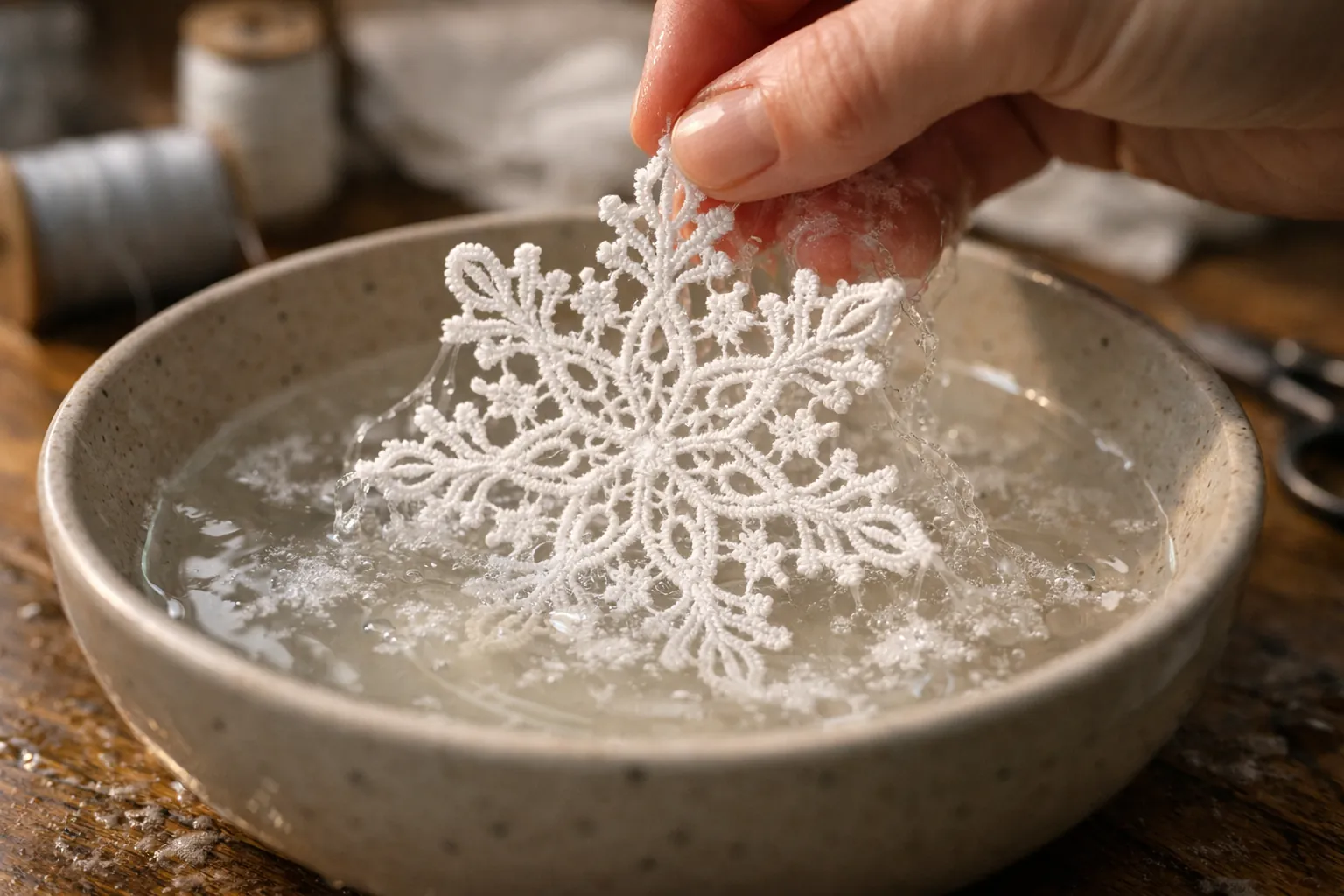
Dissolves in water, leaving nothing behind. It comes as a film (used mainly as a topping on top of fabric), as a fabric-like backing, and as sticky printable sheets. Use it for sheer fabrics, free-standing lace, and on top of towels, fleece and velvet so stitches don't sink into the pile.
Fabric-by-fabric chart
| Fabric or item | Backing | Topping? |
|---|---|---|
| Quilting cotton, linen, poplin | Tear-away | No |
| Denim, canvas, twill bags | Tear-away (heavy) or cut-away | No |
| T-shirts and jersey | Cut-away or no-show mesh | Optional for textured knits |
| Polos (pique knit) | Cut-away or no-show mesh | Often, to keep stitches on the surface |
| Sweatshirts, hoodies, fleece | Cut-away | Yes on fleece |
| Towels (terry) | Tear-away or cut-away | Yes, water-soluble film |
| Velvet, corduroy | Cut-away; sticky stabilizer avoids hoop marks | Yes |
| Structured caps | Cap tear-away (heavy) | Optional |
| Sheer organza, tulle | Wash-away | Sometimes |
| Free-standing lace | Wash-away (one or two layers) | No |
| Baby clothes, activewear | Cut-away, plus a soft cover on the back | Depends on fabric |
General starting points used across the embroidery community. Always test a sample on a scrap of the same fabric.
The stabilizers worth stocking
These were the best-selling and best-rated stabilizers in our Amazon search on October 3, 2026:
| Product | Type | Weight / size | Why it's here |
|---|---|---|---|
| New brothread tear-away, 8x8 sheets | Tear-away | 1.8 oz, 100 sheets | #1 in Sewing Stabilizers; 14,000+ ratings; 3,000+ bought last month |
| New brothread cut-away, 8x8 sheets | Cut-away | 2.5 oz, 100 sheets | #3 in Sewing Stabilizers; for knits, fleece and denim |
| New brothread cut-away roll | Cut-away | 2.5 oz, 10" x 50 yd | Cheaper per hooping once you embroider regularly |
| New brothread no-show mesh roll | Cut-away (mesh) | Light, 12" x 50 yd | For light-colored knits; soft, no show-through |
| HBI cut-away roll | Cut-away | 2.5 oz, 12" x 50 yd | 4.8 stars from 3,400+ ratings |
| New brothread water-soluble topping film | Wash-away topping | 25 micron, 10" x 10 yd | For towels, fleece, velvet; 2,000+ bought last month |
| New brothread sticky water-soluble sheets | Wash-away, adhesive | 8.5" x 11", 6 sheets | #2 in Sewing Stabilizers; for small items and hoop-mark-prone fabrics |
| HBI peel and stick tear-away | Tear-away, adhesive | 1.5 oz, 12" x 10 yd | For floating items you can't hoop |
| New brothread cap tear-away, 4x8 | Tear-away | 3 oz, 125 pieces | Precut for cap frames; heavy for high stitch counts |
| Sulky Tender Touch iron-on | Cut-away cover | 20" x 36" sheet | Irons over the back of designs to protect sensitive skin |
See the no-show mesh listing's photos of how it looks behind a light-colored knit
A starter kit for new embroiderers
- Tear-away sheets for wovens and towels.
- Cut-away sheets for T-shirts and sweatshirts.
- Water-soluble topping for towels and fleece.
- Optional: sticky water-soluble sheets for cuffs, collars and anything that won't hoop.
Precut 8x8 sheets suit 4x4 hoops; for 5x7 hoops, a 10-inch roll cut to about 10 x 12 inches is the size New brothread's roll listing recommends. See our hoop sizes guide.
Three ways to use stabilizer
1. Hoop it with the fabric (the default)
Lay the stabilizer under the fabric and hoop both layers together, so the hoop clamps the stabilizer on every side. This gives the most support and is right for T-shirts, sweatshirts and most flat items.
2. Float the item on hooped stabilizer
For things that are too thick, small or delicate to hoop (towels, collars, napped fabrics), hoop only the stabilizer, then attach the item on top with pins outside the design area, a basting stitch, or an adhesive stabilizer. Sticky products like HBI peel and stick tear-away are made for this.
3. Add a topping
Place a sheet of water-soluble film on top of high-pile fabric before stitching. It keeps stitches sitting on the surface. Tear away the excess afterwards and dab or rinse off the rest.
How many layers?
One layer of medium-weight stabilizer handles most designs. Add a second layer (or go heavier) for dense designs, large fills and lettering on soft fabrics. The brothread listings above suggest extra layers for denser designs, and the no-show mesh listing suggests adding a light tear-away beneath it for heavy stitching.
Common stabilizer mistakes
- Tear-away on a T-shirt. The design looks fine in the hoop and puckers after the first wash.
- Stabilizer smaller than the hoop. It must be clamped by the hoop on all sides to do its job.
- Skipping the topping on towels. Satin stitches and lettering sink into the loops and look patchy.
- Too light for the design. A dense design with 10,000+ stitches needs a heavier stabilizer or two layers.
- Stretching the fabric while hooping. No stabilizer can fix fabric that was stretched in the hoop.
The bottom line
Start with three: tear-away for stable wovens, cut-away for anything that stretches, and water-soluble topping for towels and fleece. Those cover the vast majority of beginner projects on any machine, from a Brother SE700 to a multi-needle.
Product details come from Amazon listings checked October 3, 2026. Prices change often, so links show the current price on Amazon. How we research · Affiliate disclosure