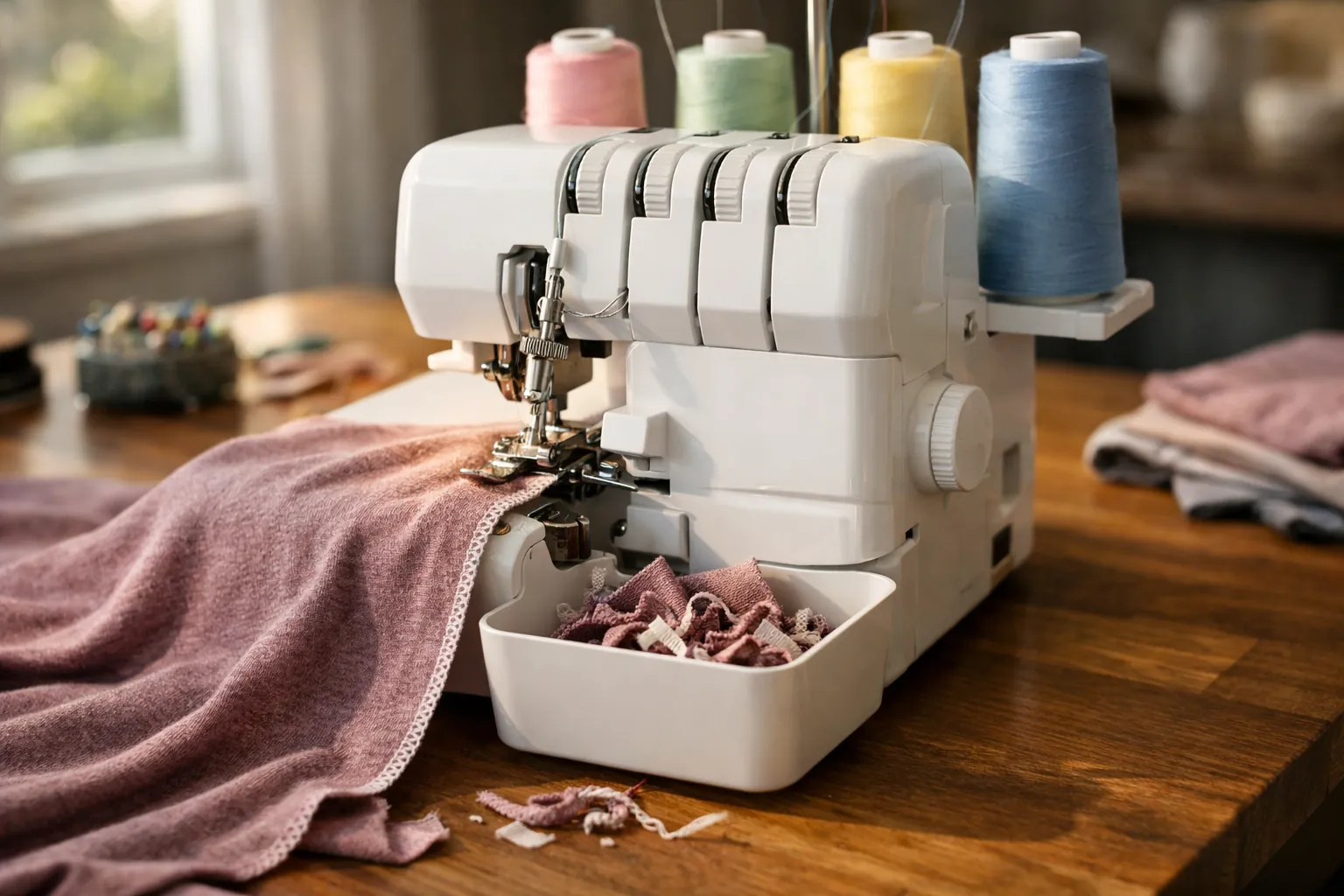
The best serger for most beginners is the Brother 1034D. It's Amazon's top-selling serger, it threads with color-coded guides, and with more than 12,000 owner ratings every beginner question has already been answered online. If threading worries you most, the Juki MO-50E has lay-in tensions and an automatic lower looper threader.
Quick picks
| Best overall | Brother 1034D | Amazon |
|---|---|---|
| Easiest to thread | Juki MO-50E | Amazon |
| Best 2-3-4 thread pick | Singer HD0500S | Amazon |
| Best for heavier fabrics | Brother ST4031HD | Amazon |
| Best for rolled hems | Janome MOD-8933 | Amazon |
| Highly rated 2-3-4 alternative | Singer S0230 | Amazon |
How we picked
- Sales and rank. Amazon's Sergers & Overlock Machines best-seller list on October 3, 2026. The Brother 1034D was #1 with 1,000+ bought in the past month.
- Threading aids, because threading is the part beginners struggle with: color-coded guides, lay-in tension, lower looper threaders.
- Differential feed for knits where listed, and metal frames where listed.
- Verified specs from each manufacturer's Amazon listing only.
This is a spec review: we compared listings and owner feedback rather than serging on every machine. How we research.
Why threading is the whole game
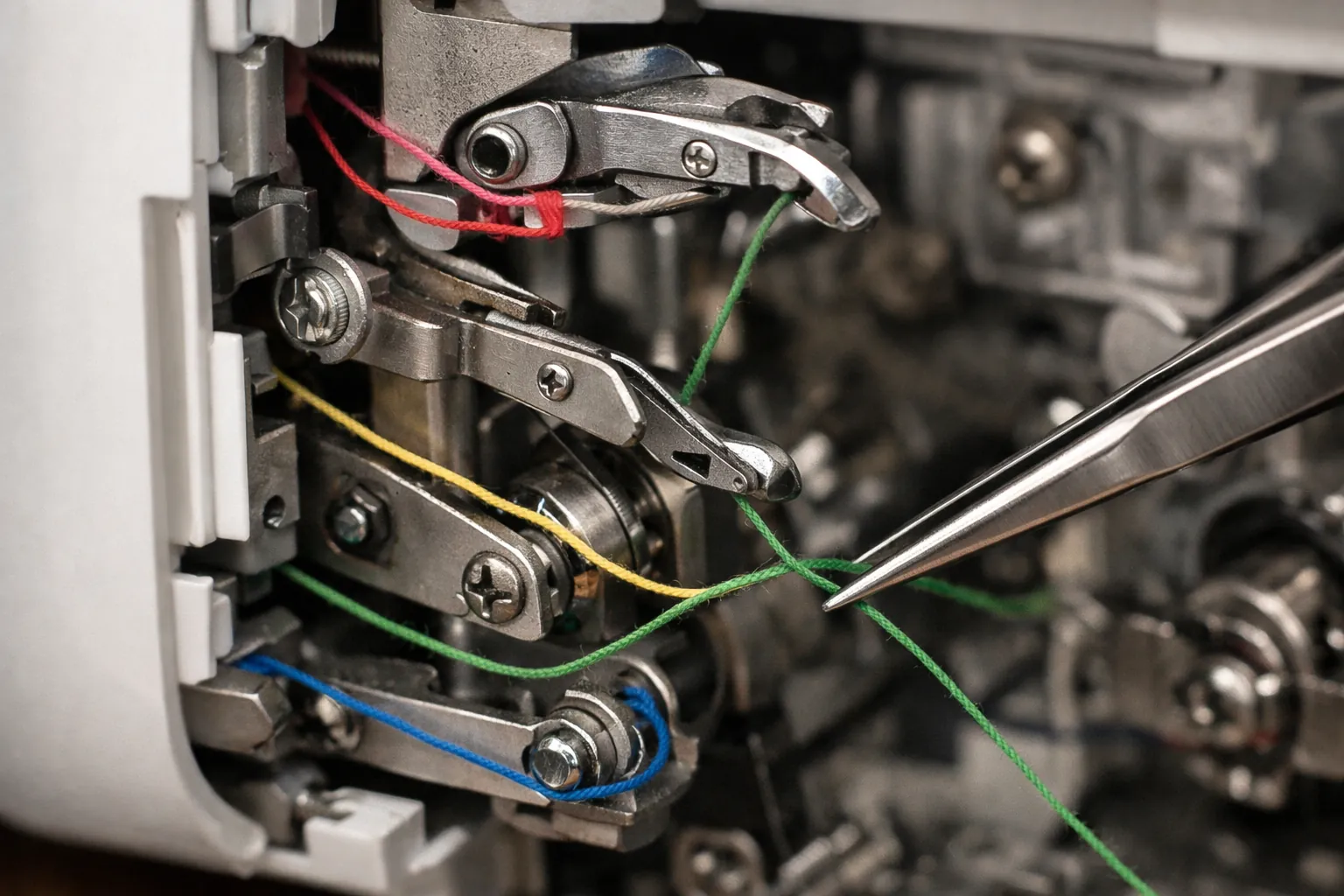
A four-thread serger has two needles and two loopers. The loopers wrap thread around the fabric edge while the needles lock it in place, and a knife trims the edge just ahead of the stitches. That's four thread paths, which is why threading guides matter so much.
Three features make threading easier, roughly in order of how much they help:
- Automatic or lever-operated lower looper threader. The lower looper is the hardest path; a threader takes it from fiddly to easy.
- Lay-in tension. The thread slips into the tension discs as you guide it, so you don't have to floss it between them.
- Color-coded guides printed on the machine, matching each path to its tension dial. Every serger here has them.
The 6 best sergers for beginners
Brother 1034D
The 1034D is the default first serger for a reason. It was #1 in Amazon's Sergers & Overlock Machines category on October 3, 2026, showed 1,000+ purchases in the past month and has more than 12,000 ratings. Brother lists a metal frame and interior components, 3- or 4-thread stitches, up to 1,300 stitches per minute and color-coded upper and lower looper threading.
It includes gathering and blind stitch feet in addition to the standard foot, and Brother says it handles multiple layers of denim. You may see a "1034DX" mentioned in reviews; in our Amazon searches the model listed was the 1034D.
- Threads3 or 4
- Speedup to 1,300 stitches/min
- Framemetal
- Threadingcolor-coded guides + lower looper threading system
- Feet included3 (standard, gathering, blind stitch)
Why it stands out
- The most-reviewed serger on Amazon, so help is everywhere
- Metal frame and 1,300 stitches per minute
- Gathering and blind stitch feet included
Think twice if
- You want 2-thread stitches: it's a 3/4-thread machine
- You want lay-in tension or an automatic looper threader
See the 1034D listing photos of the color-coded thread guides on the front cover
Juki MO-50E
If threading is what's putting you off, start here. The MO-50E combines the two biggest threading helpers, lay-in tensions and an automatic lower looper threader, plus a built-in rolled hem and an adjustable calibrated knife. Juki's reputation for stitch quality comes with it.
- Threads3 or 4
- Tensionlay-in
- Lower looperautomatic threader
- Rolled hembuilt in
- Knifeadjustable, calibrated
- Differential feedadjustable
Why it stands out
- Lay-in tension and automatic lower looper threader
- Built-in rolled hem
- Juki build quality
Think twice if
- It has far fewer Amazon ratings (about 350) than the Brother
- You need 2-thread stitches
Singer HD0500S
The HD0500S adds 2-thread stitches, which the Brother 1034D can't sew, along with a removable free arm for cuffs and sleeves. Singer lists a 20% higher-wattage motor for thick fabrics, color-coded thread paths and an LED that lights the lower looper, a smart touch for the hardest part of threading. It shares a listing family that ranked #2 in Sergers with 1,500+ ratings.
- Threads2, 3 or 4
- Stitch types6
- Speedup to 1,300 stitches/min
- Framemetal
- Extraslower looper LED, removable free arm, 2-thread converter
Why it stands out
- 2-thread stitches for fine finishes
- Lower looper LED and free arm
- Extra power for denim and canvas
Think twice if
- You want the largest owner community: that's the 1034D
Brother ST4031HD
Brother's Strong & Tough serger is essentially a 1034D-class machine built for bigger, thicker projects. It adds a blade of extra-hard carbon steel for a smoother cut and a large extension table to support heavy fabric, and it keeps the color-coded guides and numbered loopers. It ranked #4 in Sergers on Amazon.
- Threads3 or 4
- Speedup to 1,300 stitches/min
- Framemetal
- Bladeextra-hard carbon steel
- Extraslarge extension table
- Feet included3
Why it stands out
- Extension table for large projects
- Hard carbon-steel blade
- Same easy color-coded threading
Think twice if
- You mostly serge lightweight knits, since the 1034D covers that
Janome MOD-8933
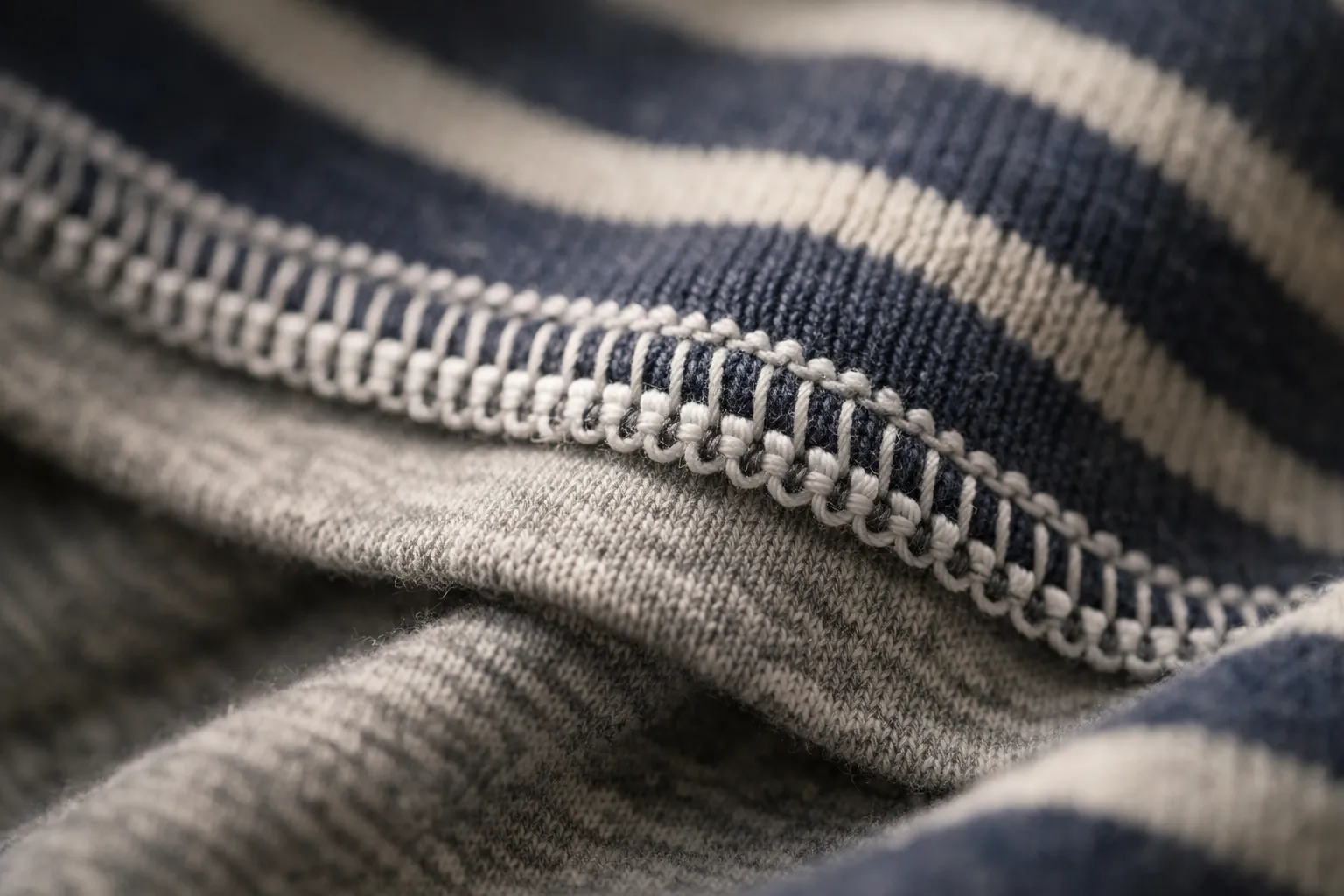
The MOD-8933 pairs lay-in threading with a quick-change rolled hem, adjustable presser foot pressure and an easy-access lower looper. If you'll make scarves, napkins or anything with a narrow rolled edge, it's set up for it. It has a 4.5-star average from more than 550 ratings.
- Threads3 or 4
- Threadinglay-in with color-coded guides
- Rolled hemquick change
- Presser foot pressureadjustable
- Lower loopereasy access with pretension slider
Why it stands out
- Lay-in threading
- Quick-change rolled hem
- Adjustable presser foot pressure
Think twice if
- Lower sales than the Brother and Singer picks, so fewer community tutorials
Singer S0230
The S0230 is a straightforward 2-3-4 thread serger with color-coded threading, adjustable differential feed and a built-in free arm for sleeves and children's clothes. It had a 4.5-star average from more than 2,200 ratings on October 3, 2026.
- Threads2, 3 or 4
- Speedup to 1,300 stitches/min
- Threadingcolor-coded
- Differential feedadjustable
- Free armbuilt in
Why it stands out
- 2-thread capability
- Free arm
- Strong ratings
Think twice if
- It lacks the HD0500S's lower looper LED and extra motor power
Side-by-side comparison
| Serger | Threads | Threading help | Free arm | Rank in Sergers |
|---|---|---|---|---|
| Brother 1034D | 3/4 | Color-coded | Check listing | #1 |
| Juki MO-50E | 3/4 | Lay-in + auto lower looper | Check listing | #9 |
| Singer HD0500S | 2/3/4 | Color-coded + looper LED | Yes, removable | #2 |
| Brother ST4031HD | 3/4 | Color-coded, numbered | Check listing | #4 |
| Janome MOD-8933 | 3/4 | Lay-in, color-coded | Check listing | #13 |
| Singer S0230 | 2/3/4 | Color-coded | Yes | #10 |
Ranks are Amazon's Sergers & Overlock Machines best-seller ranks on October 3, 2026. "Check listing" means the feature isn't stated in the listing.
What to look for in a first serger
3/4 thread or 2/3/4 thread
Three- and four-thread stitches cover almost everything: 4-thread for seams on knits and wovens, 3-thread for edge finishing and narrow rolled hems. Two-thread stitches are lighter and handy on fine fabrics, but most beginners won't miss them.
Differential feed
Essential for knits. The Singer, Juki and Janome listings above confirm it; the Brother listings don't state it, so check the manual or listing. Turn it up and the front feed dogs push more fabric, which stops knits from stretching into a wavy "lettuce" edge (unless you want that).
Rolled hem without changing parts
Some machines switch to rolled hem with a lever or dial; others need a plate or foot change. If you'll sew lots of napkins, scarves or ruffles, it's worth having.
What about a coverstitch?
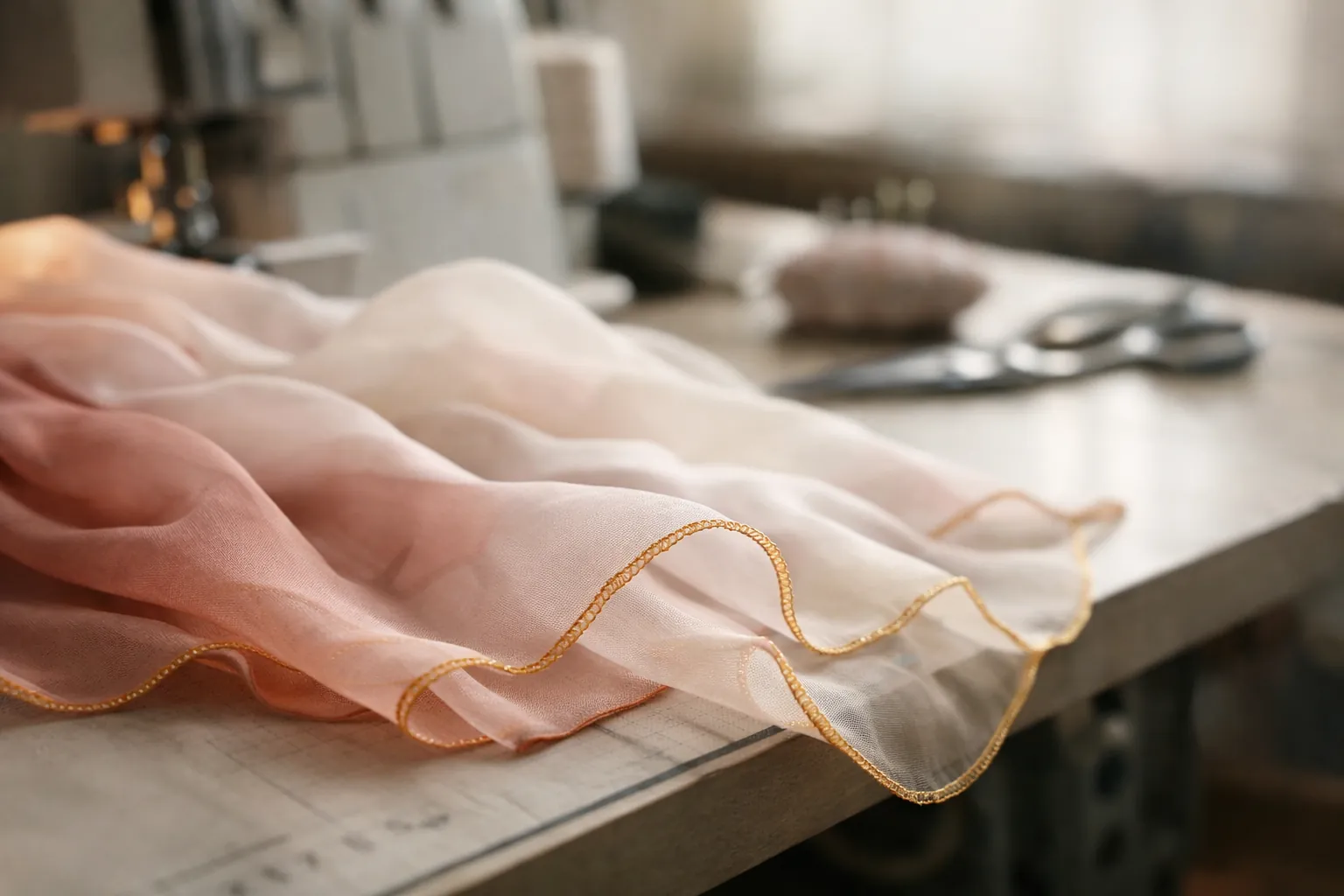
The stitched hems on store-bought T-shirts are a coverstitch, not a serger stitch. Most sergers can't do it. If you want that finish, it's a separate machine like the Brother 2340CV coverstitch (2-needle, 2-3-4 thread cover stitch). Learn on a serger first.
Your first hour with a serger
- Don't unthread it. Most sergers ship threaded. Sew a few test seams on scrap knit first, so you learn what a balanced stitch looks like before you change anything.
- Practice re-threading by tying on. Cut each thread near its cone, tie the new color on with a small knot, and gently sew or pull the knots through. It's how most people change colors, and it teaches you the four paths.
- Learn the tension dials one at a time. If loops hang off the edge, the looper tensions are off; if the seam pulls apart like a ladder, the needle tension is too loose. Change one dial at a time and test on scrap.
- Keep pins away from the knife. A serger trims as it sews. Use clips, or pin well back from the edge.
What to buy with your serger
- Serger thread on cones. A 4-thread serger uses four spools at once, so buy cones, not small spools. The Maxi Lock 4-cone set (3,000 yards each) is a staple. Our serger thread guide covers colors, weights and brands.
- The right needles. Check your manual: many home sergers take standard household needles, while some need ELx705 serger needles.
- Long tweezers and a lint brush usually come in the box; keep them handy for threading and cleaning trimmings out of the loopers.
The bottom line
The Brother 1034D is the best serger for most beginners: proven, popular and simple. If threading is your biggest worry, the Juki MO-50E makes it easiest, and if you want 2-thread stitches and a free arm, choose the Singer HD0500S. Not sure you need a serger at all? Read sewing machine vs serger.
Specs and features come from each manufacturer's Amazon listing, checked October 3, 2026. Prices change often, so the buttons above show the current price on Amazon. How we research · Affiliate disclosure