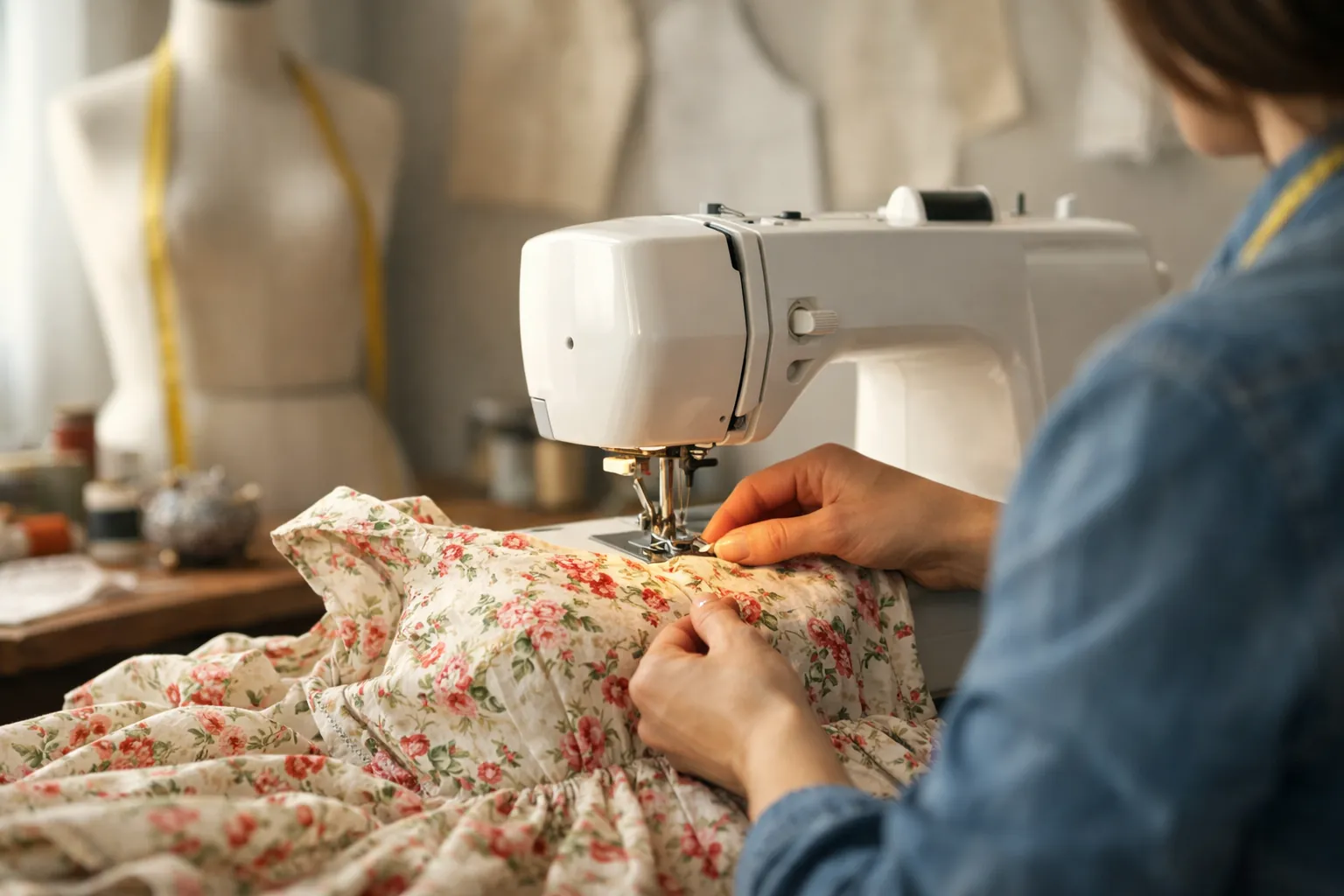
Most people who want to make clothes should buy the Brother CS5055. You get seven one-step buttonhole styles and 60 stitches on a metal frame, at a price that leaves money for fabric. For finer work, the Janome JW8100 adds speed control, needle up/down and a start/stop button. Jeans and coats are a different job, and the Singer Heavy Duty 4423 has the power for them.
Quick picks
| Best overall for clothes | Brother CS5055 | Amazon |
|---|---|---|
| Most control for fine work | Janome JW8100 | Amazon |
| Most garment feet in the box | Singer Quantum Stylist 9960 | Amazon |
| Best mid-price Brother | Brother CP100X | Amazon |
| Most stitches for the money | Brother XR9550 | Amazon |
| Best for jeans and coats | Singer Heavy Duty 4423 | Amazon |
| Best companion for knits | Brother 1034D serger | Amazon |
How we picked
Garment features decided the ranking. We counted one-step buttonholes and how many styles each machine sews, then looked for stretch stitches, a free arm, speed control, needle up/down and which garment feet come in the box. Sales and ratings on Amazon (October 3, 2026) separated machines that were close on features. Specs come only from each manufacturer's Amazon listing.
This is a spec review, built from listings and owner feedback rather than sewing tests. How we research.
What each part of a garment asks of your machine
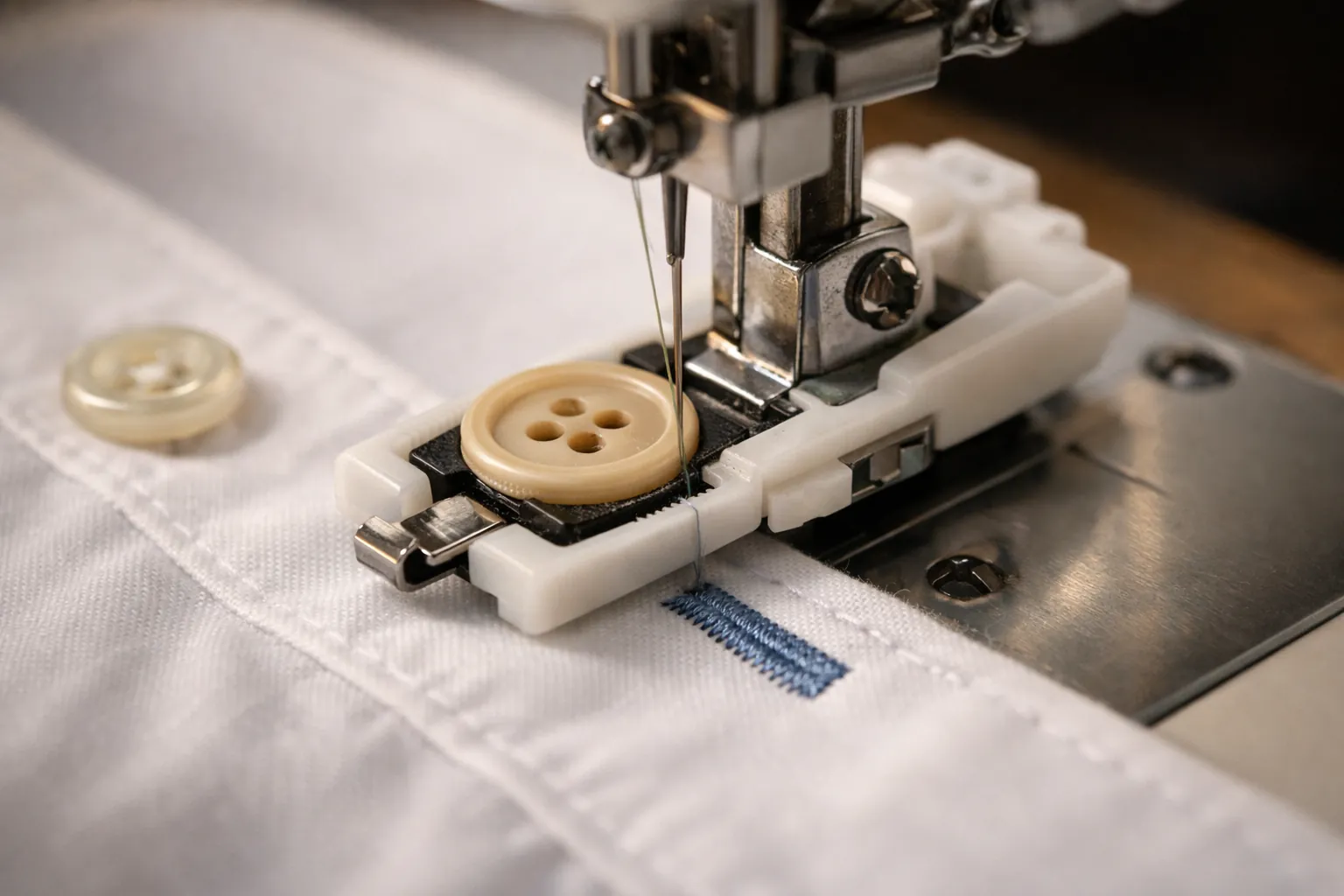
Start with the buttonhole. On a one-step buttonhole you put the button in the foot and the machine sizes the buttonhole from it. Extra styles are a bonus: keyhole for jackets, rounded for blouses.
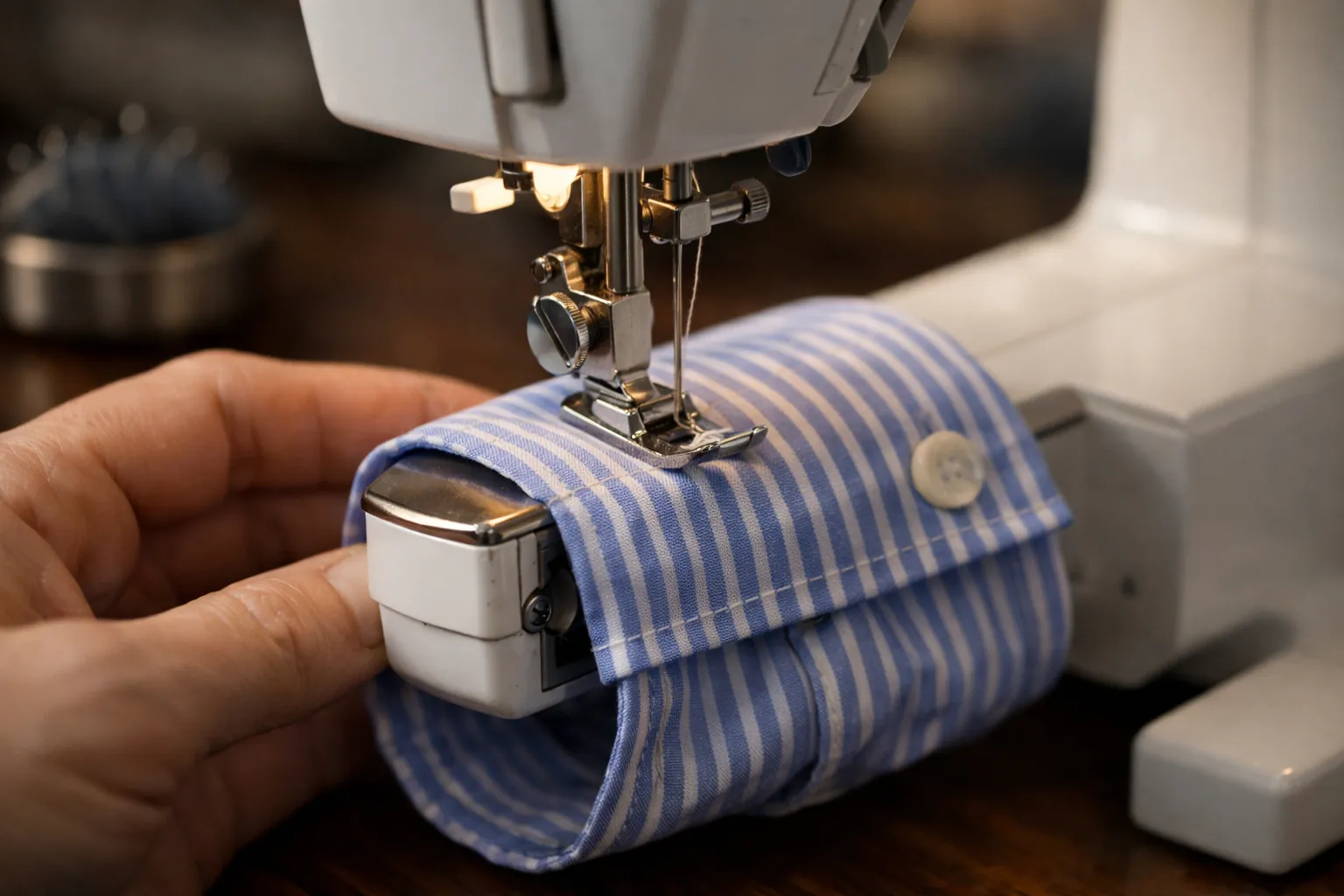
Sleeves and cuffs need a free arm, which appears when you slide off the accessory tray, so you can sew them (and trouser hems) in the round. Knits need stretch stitches, or the seams pop when the fabric stretches.
Collars and curves are where speed control and needle up/down pay off. You can stitch slowly and precisely, and pivot without the fabric shifting. The garment feet you'll reach for most are a zipper foot and a blind hem foot. Overcasting and button-sewing feet come next.
The 7 best sewing machines for making clothes
Brother CS5055
Everything a garment sewist needs, at an entry price. There are seven one-step buttonhole styles and 60 stitches (utility and decorative, plus heirloom). The LCD shows your stitch settings, and the metal frame with a fixed needle bar keeps topstitching straight and even. It was #7 in Sewing Machines on Amazon with 1,000+ bought in the past month.
- Built-in stitches60 (utility, decorative, heirloom)
- Buttonholes7 one-step auto-size
- Feet included7
- Framemetal, fixed needle bar
- Threaderautomatic
- Bobbindrop-in
Why it stands out
- Seven buttonhole styles
- Metal frame and fixed needle bar for neat topstitching
- Great value
Think twice if
- You want speed control and needle up/down for fine work
Janome JW8100
Collars and curves get easier with three controls this Janome has: a speed slider so you can slow right down, a needle up/down button for pivoting at corners, and a start/stop button. Janome lists its 7-piece feed dog system as helping prevent shifting or puckering on cottons and knits, and on layered fabrics. Take off the front drawer and there's a free arm.
- Built-in stitches100
- Buttonholes7 one-step
- Controlsspeed slider, start/stop, needle up/down
- Feed7-piece feed dogs
- Free armyes
- Includedhard cover, extension table
Why it stands out
- Speed control, start/stop and needle up/down
- Seven one-step buttonholes
- Hard cover and extension table included
Think twice if
- Fewer ratings than the Brother picks (about 970)
Singer Quantum Stylist 9960
This one arrives ready for nearly every garment technique. Among its thirteen presser feet are a narrow hem foot, a blind hem foot and an overcasting foot, plus a zipper foot and a button-sewing foot. It sews 13 styles of one-step buttonhole, keyhole buttonholes for jackets and coats among them. Speed control and a start/stop button help on detail work.
- Built-in stitches600
- Buttonholes13 one-step incl. keyhole
- Feet13 (incl. zipper, blind hem, narrow hem, overcasting, button sewing)
- Controlsspeed control, start/stop
- Extraslettering font, mirror imaging
Why it stands out
- 13 buttonhole styles, including keyhole
- Narrow hem and blind hem feet included, plus overcasting
- 9,000+ ratings
Think twice if
- 600 stitches is more menu than most garment sewists need
Brother CP100X
One step up from the CS5055, on the same metal frame with a fixed needle bar. You get 100 stitches and eight auto-size buttonholes, and ten feet and a hard case come with it. Brother describes it as handling everything from thick denim to heavy quilts. Good if you sew clothes and the occasional quilt.
- Built-in stitches100
- Buttonholes8 auto-size
- Feet included10 + quilt guide
- Framemetal, fixed needle bar
- Extraswide table, hard case
Why it stands out
- Eight buttonhole styles
- Ten feet and a hard case
Think twice if
- Speed control isn't listed
Brother XR9550
Sew a name or a label right into a garment with the 55 alphanumeric stitches. The other 110 utility and decorative stitches cover heirloom details on children's clothes and blouses. It showed 1,000+ purchases in the past month.
- Built-in stitches165 (110 + 55 alphanumeric)
- Buttonholes8 auto-size
- Feet included8
- Extraswide table, hard cover
Why it stands out
- Lettering for garment labels
- Eight buttonhole styles
Think twice if
- Speed control isn't listed
Singer Heavy Duty 4423
Denim and wool coats have bulky seams that lighter machines balk at, and so do canvas jackets. This Singer has the stronger motor for them, plus an extra-high presser foot lift and adjustable presser foot pressure. Delicate fabrics suit the computerized picks better, but for a jeans-and-outerwear sewist it's the right tool. See heavy-duty machines for more options.
- Built-in stitches23 (97 applications)
- Speedup to 1,100 spm
- Framemetal
- Presser footadjustable pressure, extra-high lift
- Buttonholeone-step
Why it stands out
- Power for denim and outerwear
- 21,000+ ratings
Think twice if
- Fewer stitch options for lightweight and decorative work
Brother 1034D serger
Not a sewing machine. It's the second machine most garment sewists buy. The 1034D trims and finishes knit seams in the same pass it sews them, and seam allowances come out with a ready-to-wear finish. It's Amazon's #1 serger. Read sewing machine vs serger before you buy.
- Threads3 or 4
- Speedup to 1,300 spm
- Framemetal
- Feetstandard, gathering, blind stitch
Why it stands out
- Fast, stretchy knit seams
- Professional seam finishes
Think twice if
- Can't sew buttonholes, zippers or topstitching
Garment features compared
| Machine | Buttonhole styles | Speed control | Needle up/down | Free arm |
|---|---|---|---|---|
| Brother CS5055 | 7 | Check listing | Check listing | Check listing |
| Janome JW8100 | 7 | Yes | Yes | Yes |
| Singer 9960 | 13 | Yes | Check listing | Check listing |
| Brother CP100X | 8 | Check listing | Check listing | Check listing |
| Brother XR9550 | 8 | Check listing | Check listing | Check listing |
| Singer 4423 | 1 (one-step) | Not listed | Check listing | Yes |
"Check listing" means the Amazon listing doesn't state it. Many machines have these features without listing them, so check the manual or product photos.
Choosing by what you sew
| You mostly make | Pick |
|---|---|
| Everyday clothes, learning garment sewing | Brother CS5055 |
| Blouses, shirts, fine fabrics | Janome JW8100 (speed control, needle up/down) |
| Tailored jackets and coats | Singer 9960 (keyhole buttonholes, many feet) or Singer 4423 (bulk) |
| Jeans | Singer Heavy Duty 4423 |
| Kids' clothes with names and details | Brother XR9550 |
| T-shirts, leggings, activewear | Any of the above plus the Brother 1034D serger |
Sewing knits on a sewing machine
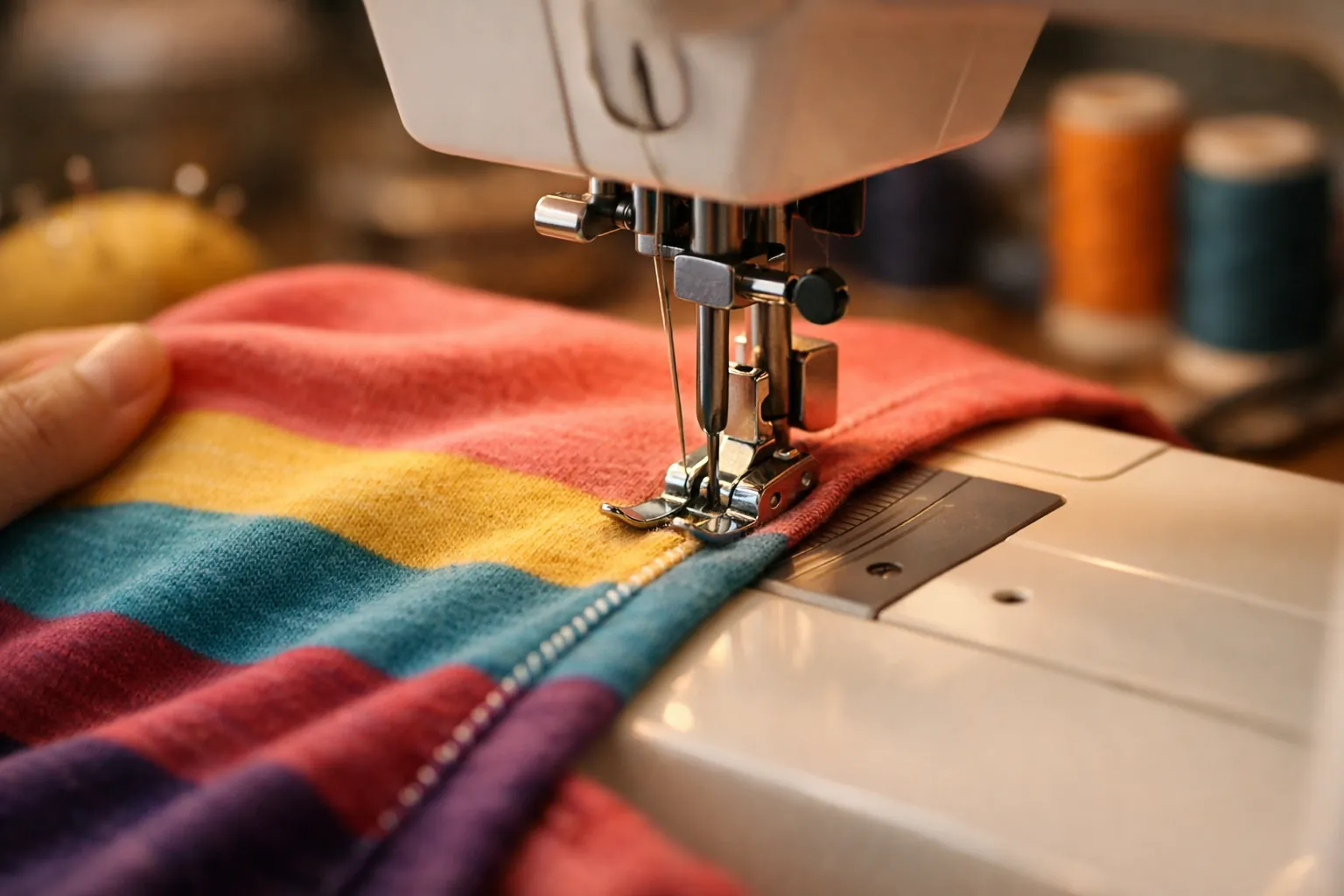
You don't need a serger for knits. Put in a ballpoint or jersey needle, choose a narrow zigzag or lightning-bolt stretch stitch, and don't stretch the fabric as you sew. Our needle size chart matches needles to fabrics.
Making clothes and doing embroidery?
Then look at a combo machine, which does both. The Brother SE700 has 103 stitches and 4x4 embroidery; the Brother SE2000 has 241 stitches and 5x7 embroidery. See embroidery machine vs sewing machine.
Starting settings for common garment fabrics
These starting points work on any of the machines above. Test on a scrap of your fabric before the real seam.
| Fabric | Needle | Stitch | Stitch length |
|---|---|---|---|
| Lawn, voile, silk-like polyester | Microtex 60/8-70/10 | Straight | About 2 mm |
| Quilting cotton, shirting, poplin | Universal 80/12 | Straight | About 2.5 mm |
| Linen, medium wovens | Universal or Microtex 80/12-90/14 | Straight | 2.5-3 mm |
| Jersey, T-shirt knit | Ball point / jersey 75/11-80/12 | Narrow zigzag or stretch | About 2.5 mm |
| Swimwear, activewear | Stretch 75/11-90/14 | Stretch or zigzag | About 2.5 mm |
| Denim, canvas | Jeans 100/16-110/18 | Straight; topstitch longer | 3-3.5 mm |
| Wool coating | Universal 90/14-100/16 | Straight | 3 mm |
More detail in our needle size chart.
Mechanical or computerized for garments?
Computerized, if your wardrobe plans include buttons. What a computerized machine adds for garments is mostly buttonholes and precision: several one-step buttonhole styles, an LCD that shows exact stitch length and width, and on some models speed control and needle up/down. For shirts and dresses with rows of buttons, that's worth paying for. If you mostly make elastic-waist skirts and pajamas, or knit tops, a sturdy mechanical machine with a one-step buttonhole is enough.
Garment-sewing extras worth buying
- Ball point jersey needles (70/10 to 90/14) for knits.
- Schmetz Microtex sharp needles, 90/14 for crisp topstitching on wovens.
- Gutermann Sew-All thread set (20 colors) for matching thread to fabric.
- Heat-erasable fabric marking pens for marking darts and hem lines, and buttonhole placement.
Match the machine to your wardrobe
If you're making your first skirts and tops, get the Brother CS5055; it's the right machine for most people sewing clothes. Silk-like blouses and fiddly collars point to the Janome JW8100, for its speed control and needle up/down. If you want every garment foot in the box from day one, buy the Singer 9960. Jeans and coats need the Singer 4423. Whichever you choose, the Brother 1034D serger is the next purchase once knits become a habit.
Specs come from each manufacturer's Amazon listing, checked October 3, 2026. Prices change often, so the buttons above show the current price on Amazon. How we research · Affiliate disclosure